
Buyers of commercial vegetation equipment are rightly tired of claims that exist only on a slide. “Handles tall grass” and “all-terrain” are easy to print and hard to prove, and the gap between a brochure and a real site is where most disappointments happen. The people responsible for roadsides, drainage corridors, dams and vacant land do not need another maximum number. They need a simple question answered: on my difficult ground, will it actually finish the job?
That is the only question this field note tries to answer. We took one production T1-900A — a tracked, hybrid-powered autonomous flail mower with a 900 mm deck — to three deliberately unkind sites: an untidy roadside strip, a reed-choked wasteland and a 25-degree embankment. Each site is a known pain point for hand crews and a known failure point for ordinary rotary mowers. What follows is what the machine did, in plain terms.
The machine in this test
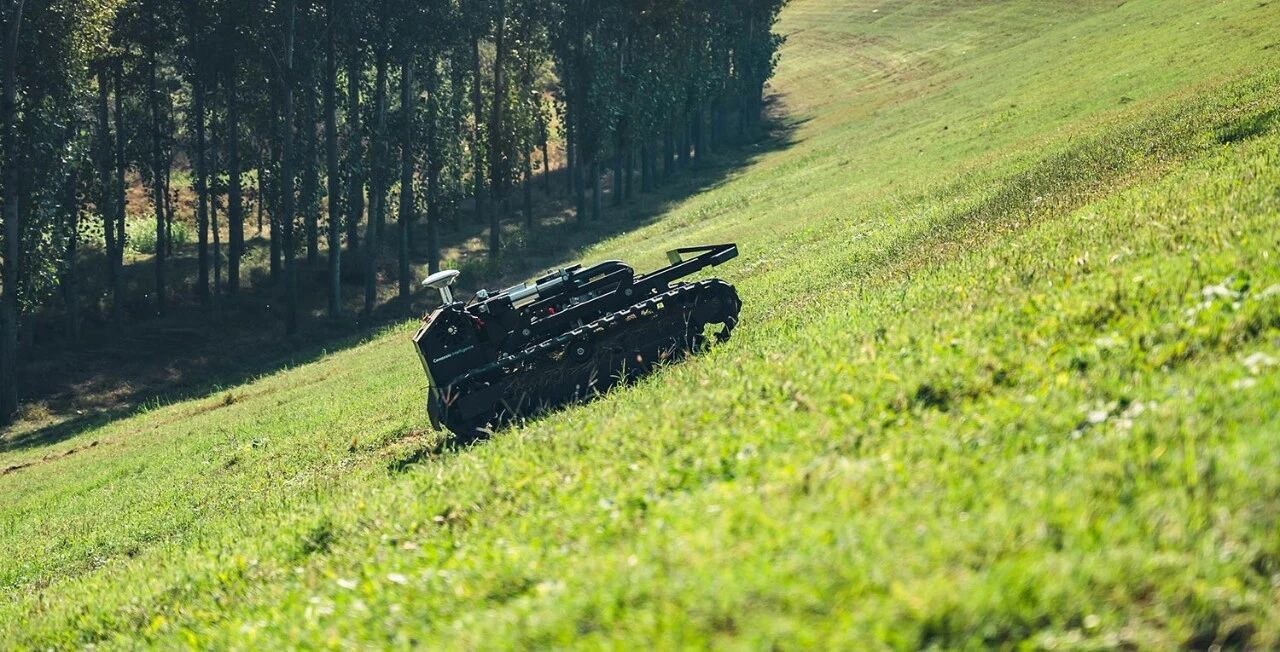
A quick word on what the T1-900A is, because the details matter on ground like this. It is a fully autonomous commercial mower, not a radio-controlled toy: the working area and no-go zones are mapped once, after which the machine plans its route, mows, handles obstacles and returns on its own. Staff monitor status and receive alerts; they are not on the machine or steering it by hand through the cut. The characteristics relevant to these three tests:
- 900 mm flail deck — flail (hammer-knife) cutting elements that shear tough, fibrous and semi-woody stems rather than relying on a high-speed blade that stalls in them
- Wide tracked undercarriage that spreads ground pressure for soft ground and gives bite across side slopes
- Hybrid drive for sustained high-torque work in dense growth, with no mains power needed on remote sites
- RTK-GNSS guidance with virtual boundaries, so corridors, verges and irregular embankments are cut to a stored, repeatable path
- Slope capability rated to 40° — on this day the steepest real site measured 25°, and we report the actual number rather than the maximum
Why a flail deck and tracks, rather than a wheeled rotary mower? A rotary disc is excellent on level lawn but asks stems to stand up straight and meet a fast blade; heavy or lodged grass bends away and clumps underneath. A flail drum pulls material in and cuts it with repeated hammer blows, which is what tall, tangled and woody growth requires. Tracks, meanwhile, keep the machine moving and stable where tyres spin, sink or slide. The three tests below are built around exactly those two differences.
Test 1 — Messy roadside thatch
The site
Road verges are the perennial headache of municipal maintenance. The grass is not a lawn: it grows unevenly, leans in different directions, and is laced with grit, stones and the occasional piece of litter thrown from a vehicle. Hand-cutting with a brush cutter is slow and noisy, and after the crew leaves the finish is still ragged and visibly grows back within a couple of weeks.
What happened
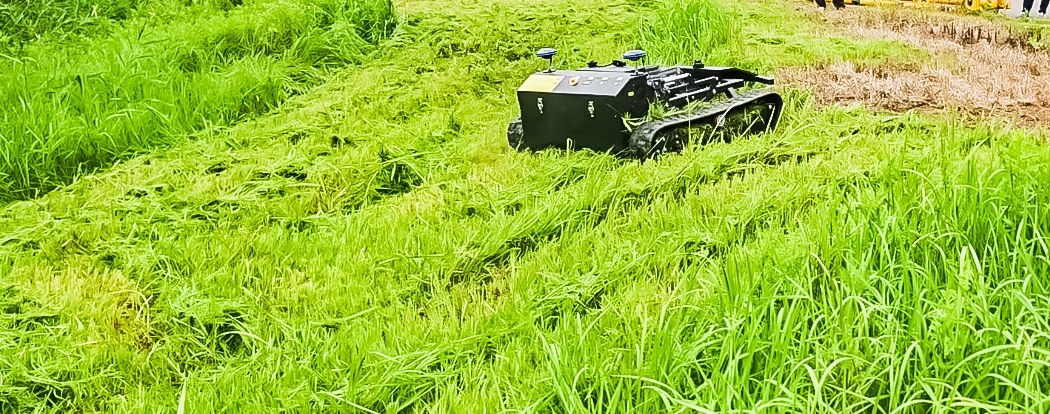
The machine advanced at a steady working pace while the flail drum cut the collapsed, uneven thatch cleanly at the base in a single pass. Coverage reached the full cutting width with no uncut ribbons or scalped patches, and the cut material was finely processed rather than left as windrows that would smother regrowth. After a stretch measured in tens of minutes rather than days, the previously rough verge read as a clean, even band.
Field result
One pass, cut to the base, uniform finish across the full 900 mm width. The rough verge became a tidy strip without a follow-up pass with a line trimmer, and without an operator walking alongside it with a brush cutter and ear protection.
For a verge that a hand crew would normally spend days on across both sides of a road, the machine covered the same stretch in a fraction of the time — and left a straighter, more even edge than hand work usually produces.
The practical point for roads authorities is consistency. A verge cut to a stored route on a fixed schedule cannot be skipped because the crew was reassigned, and it looks the same kilometre after kilometre, which is the standard residents actually notice.
Test 2 — Wasteland reeds and mixed brush
The site
The second site was an uncultivated patch dominated by wild reeds and coarse weeds on uneven ground. Reed stems are thick, fibrous and surprisingly strong: a hand sickle struggles to bite, and an ordinary consumer rotary mower that meets a dense clump will bog the blade or trip its protection. Clearing ground like this conventionally means several workers, repeated passes and a real risk of cuts, thrown debris and fatigue.
What happened
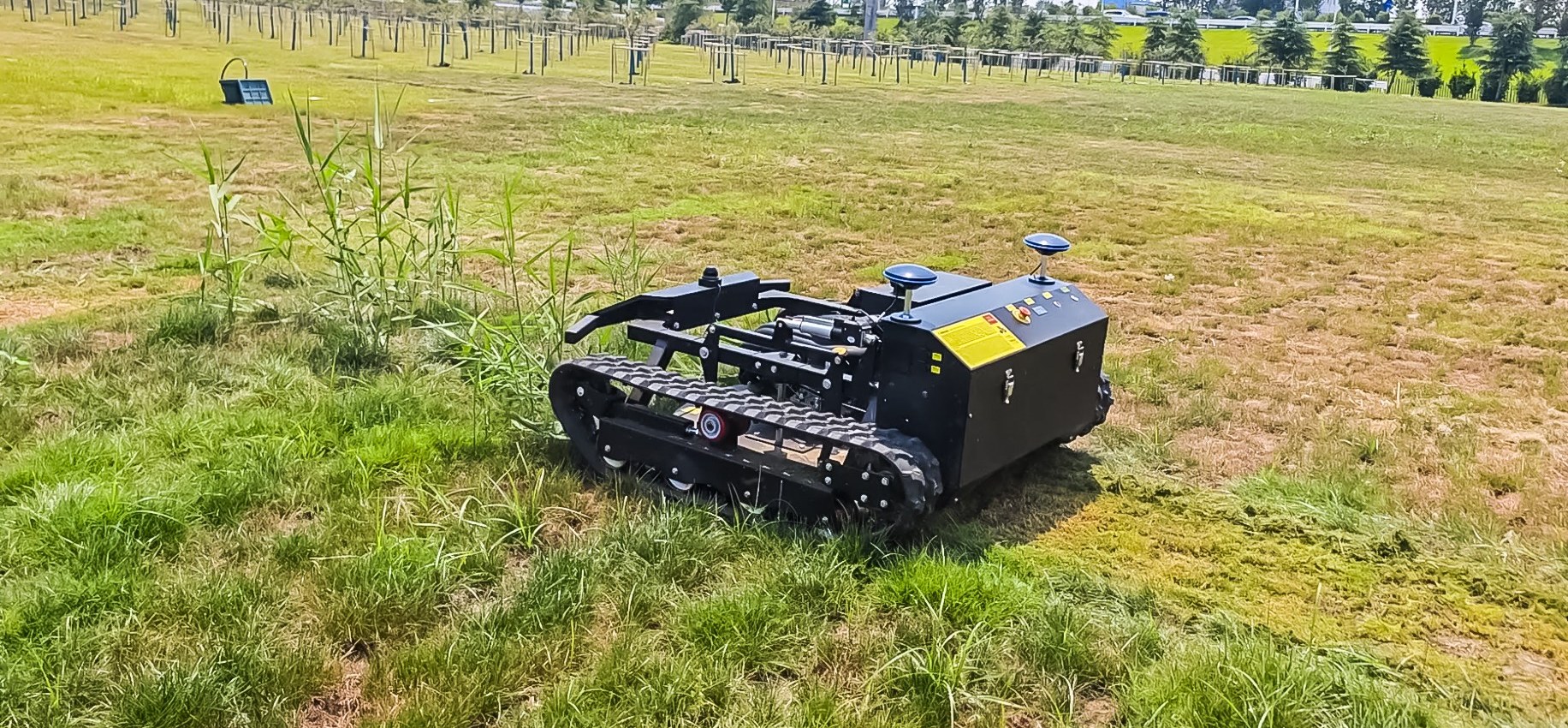
The high-torque hybrid drive and flail drum worked together here. The cutting elements engaged the reed stems low and sheared through them in a continuous, rolling cut — no stalling, no clogging and no need to back out of a thick clump for a second attempt. A single pass left the area opened up and visibly cleared, with the stems processed down rather than merely bent over. The tracked chassis walked over the uneven, partly soft surface without the operator having to pick a line by hand.
Field result
Dense reeds and mixed coarse weeds cleared in essentially single passes, with no blade stall and no blockage of the deck. This is the growth that small rotary mowers are returned for, and the exact material the flail design is built for.
It is worth being precise about limits. The T1-900A is a grass-and-brush flail mower, not a forestry mulcher: it handles reeds, tall grass and light woody brush within its rated stem capacity, not mature saplings or trunks. On this site the young trees behind the cutting zone were set as an exclusion area, which the machine respected on its stored path.
Test 3 — The 25° embankment
The site
Slope mowing is the job with the least margin for error. Embankments, dam walls, levees and drainage banks routinely run steeper than crews are comfortable walking with a brush cutter, where fatigue, loose footing and the weight of a machine on the back create a genuine fall hazard. Conventional ride-on equipment either cannot climb the face or reaches it with a centre of gravity that makes side-slope work dangerous, so many of these banks are simply left to grow until they become an access and fire-risk problem.
What happened
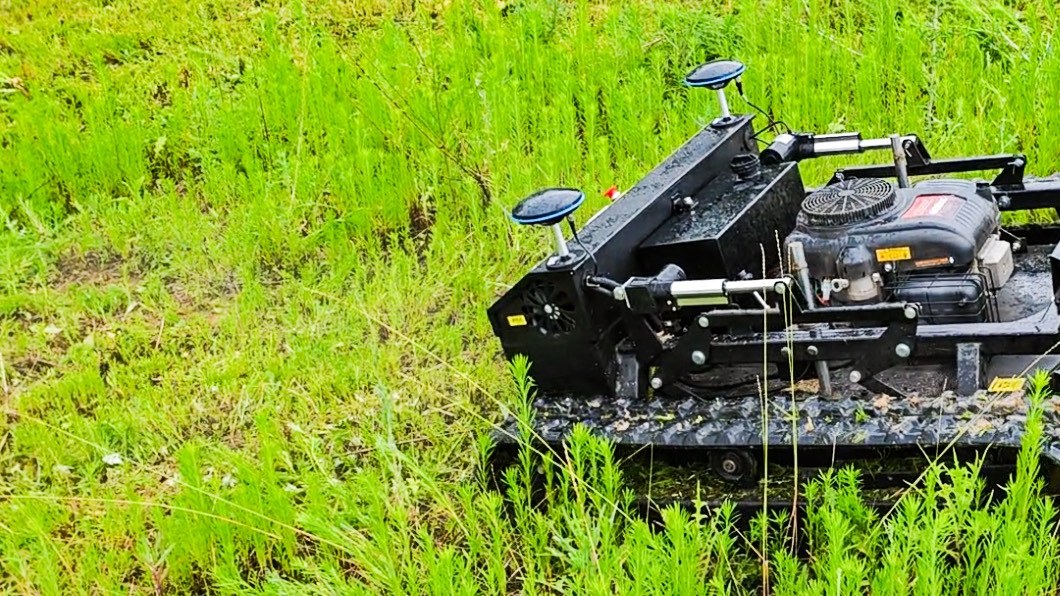
This face measured 25° — deliberately inside the machine's rated capability, and a genuinely steep bank for anyone on foot. The T1-900A held the face throughout the run: the tracks bit and the machine followed its planned contour lines with no slip, no downhill slide and no loss of cut quality. The grass was trimmed to an even height across the slope, within the set cutting range. Critically, the person responsible stayed on level ground at the top of the bank, monitoring the run — no one carried a power tool up the face.
Field result
Stable, even mowing across a measured 25° slope with no slippage, and zero workers on the incline. The safety gain — removing a person from a steep, blade-adjacent task — is the single most important result of the three.
Where these banks have historically meant accepting either a fall hazard or unchecked growth, an autonomous tracked machine that holds the face on its own changes the decision entirely: the slope gets maintained, and the worker stays on flat ground watching status and alerts.
We deliberately report 25 degrees rather than a larger number, because an honest field result is more useful than a maximum. The machine is engineered and rated for steeper faces up to 40°, but traction on any given bank also depends on soil, moisture, tyre-versus-track choice and surface condition, and those are confirmed on the actual site rather than assumed from a headline figure.
All three sites, side by side
| Site | Why it is hard | Observed result |
|---|---|---|
| Roadside thatch | Lodged uneven grass, grit and debris; slow noisy hand work, quick regrowth | Clean base cut in one pass; full-width even strip; no trimmer follow-up |
| Wasteland reeds | Thick fibrous stems, rough soft ground; ordinary rotary mowers stall | Continuous no-clog flail cut, single passes; tracks handled uneven surface |
| 25° embankment | Fall hazard for crews; ride-on equipment unsafe or unable to climb | Held the slope with no slip; even cut; operator supervised from level ground |
Why “autonomous” matters more off the lawn
On a flat sports field, autonomy is mainly a labour saving. On the sites in this test it is also a safety and reliability feature. Because the route is mapped and repeated, an embankment is cut the same way every cycle instead of depending on how a particular operator feels that morning; because the machine follows a planned path and respects exclusion zones, trees, water edges and roadways are kept out of the cutting area automatically; and because a person supervises remotely rather than riding or walking the machine, the most hazardous jobs — the steep bank, the rock-hard reed bed, the traffic-adjacent verge — are precisely the ones where the worker is moved furthest from the blade.
Supervision is the right word. Operators set the area, watch progress and status alerts, and intervene only when the machine asks for attention; the day-to-day driving and cutting stay autonomous. That is a different safety model from a remote-controlled deck that still needs a skilled operator concentrating on every metre of a slope.
What to check on your own difficult site
A field test proves the machine on these three sites; it does not replace a survey of yours. When evaluating a tracked flail mower for rough ground, work through this with your supplier or dealer:
- Measure the real slopes. Survey the steepest face in degrees under the conditions you actually mow in — wet grass and loose soil change traction. Compare the real number honestly to the rating.
- Identify the heaviest growth. Note stem thickness and the woodiest species; confirm they sit within the flail's rated cutting capacity, and exclude genuine saplings and trees.
- Walk the ground conditions. Mark soft spots, drainage channels, rock, drops and standing water that even tracks should avoid.
- Map boundaries and hazards. Roads, water, culverts, fencing and public access points become defined exclusion or buffer zones.
- Plan fuel, charging and access. A hybrid platform suits remote banks with no power, but you still need vehicle access and a secure point to service and refuel.
- Define the supervision model. Decide who monitors runs and alerts, how many machines one person oversees, and how the public or other crews are kept clear.
- Confirm support. Dealer response, flail and track parts availability, and who performs the one-time mapping matter as much as the hardware.
Questions from the field
Is the T1-900A autonomous or remote-controlled?
It is fully autonomous. The site is mapped once with virtual boundaries; after that the machine plans its route, mows, avoids obstacles and returns on its own. Staff monitor progress and receive status alerts from a safe position — they are not continuously steering it. Remote control-style operation, where an operator drives every metre, is a different class of machine.
Will a flail mower really cut reeds without blocking?
On this test it cut dense reeds in single passes with no stall or clogging, because flail elements shear fibrous stems with repeated hammer blows instead of depending on a fast disc that thick material can stall. The limits are real, though: mature saplings and trunks are outside its capacity and should be excluded.
How steep a bank can it actually handle?
It is engineered for slopes up to 40°, and in this field test it held a measured 25° embankment with no slippage. We quote the measured number on purpose: the safe angle on your bank also depends on soil, moisture and surface, so the steepest real face should be surveyed rather than matched to the headline rating.
Does cutting tall thatch leave a mess?
The flail action finely processes the cut material, which then settles into the surface rather than being left as heavy windrows. On the roadside test the finish was an even band with no need for a second cleanup pass.
Where people are involved, how is safety managed?
The machine works within mapped boundaries and keeps workers off the slope and away from the deck; operators supervise from level ground and act on alerts. As with any autonomous equipment, the operator remains responsible for exclusion zones, signage and keeping the public and other crews clear during operation.
The honest conclusion
Three sites, one consistent story. On lodged roadside grass the flail deck cut to the base in a single even pass; in a reed-choked wasteland it powered through stems that stall ordinary mowers without blocking; and on a measured 25-degree bank it held the slope while the worker stayed on level ground. None of that depends on a maximum figure from a brochure — it is what the machine did on the day, on ground chosen specifically because it is difficult.
If you maintain roadsides, drainage and dam corridors, vacant land or any estate where the difficult periphery keeps getting deferred, the useful next step is to have your own steepest bank and heaviest growth assessed against the same machine. Specifications open the conversation; the site finishes it.