
There is a particular request that comes up in almost every dealer conversation, usually before specifications are discussed at all: can you send a photo of what the lawn looks like afterwards? Not the machine on the grass. The grass after the machine. Buyers ask it because that photograph answers the only question that really matters to them — whether the finish is good enough to put in front of their own customer.
It is also the photograph most suppliers never send, because a machine parked on turf photographs well and a cut surface does not flatter anyone. So this page is the other kind. Everything below was shot on working sites, uncropped apart from framing, with no retouching of the grass itself.
Why the question keeps coming back
Autonomous mowers are usually bought on trust: the buyer cannot see the machine work before it ships, cannot trial it on their own ground, and is being asked to commit to a unit that will run unattended for hours. In that situation the cut quality becomes the proxy for everything else. If the finish looks rough in a photo, the buyer assumes the guidance is imprecise, the deck is weak and the after-sales will be worse. If the finish looks clean, they relax.
That makes the cut surface unusually load-bearing, and it is worth being precise about what you are actually looking at in one. There are three things, and they are separable.
The first thing you see: the pattern
After a pass, the lawn shows visible bands where the deck has travelled. People call them stripes, and on sports turf they are deliberate, but on a working site they are simply the record of the machine's route.
What matters is not that the bands exist — any mower leaves tracks — but that they are consistent across the full width of the deck. A deck that is level and correctly set produces a band of even height from one edge to the other. A deck that is out of adjustment produces the tell-tale asymmetric band: scalped to pale stubble on one side, a strip of standing grass left on the other. Once you know to look for it, it is obvious in a photograph, and it is the single fastest way to tell a properly set machine from one that has simply been driven around.
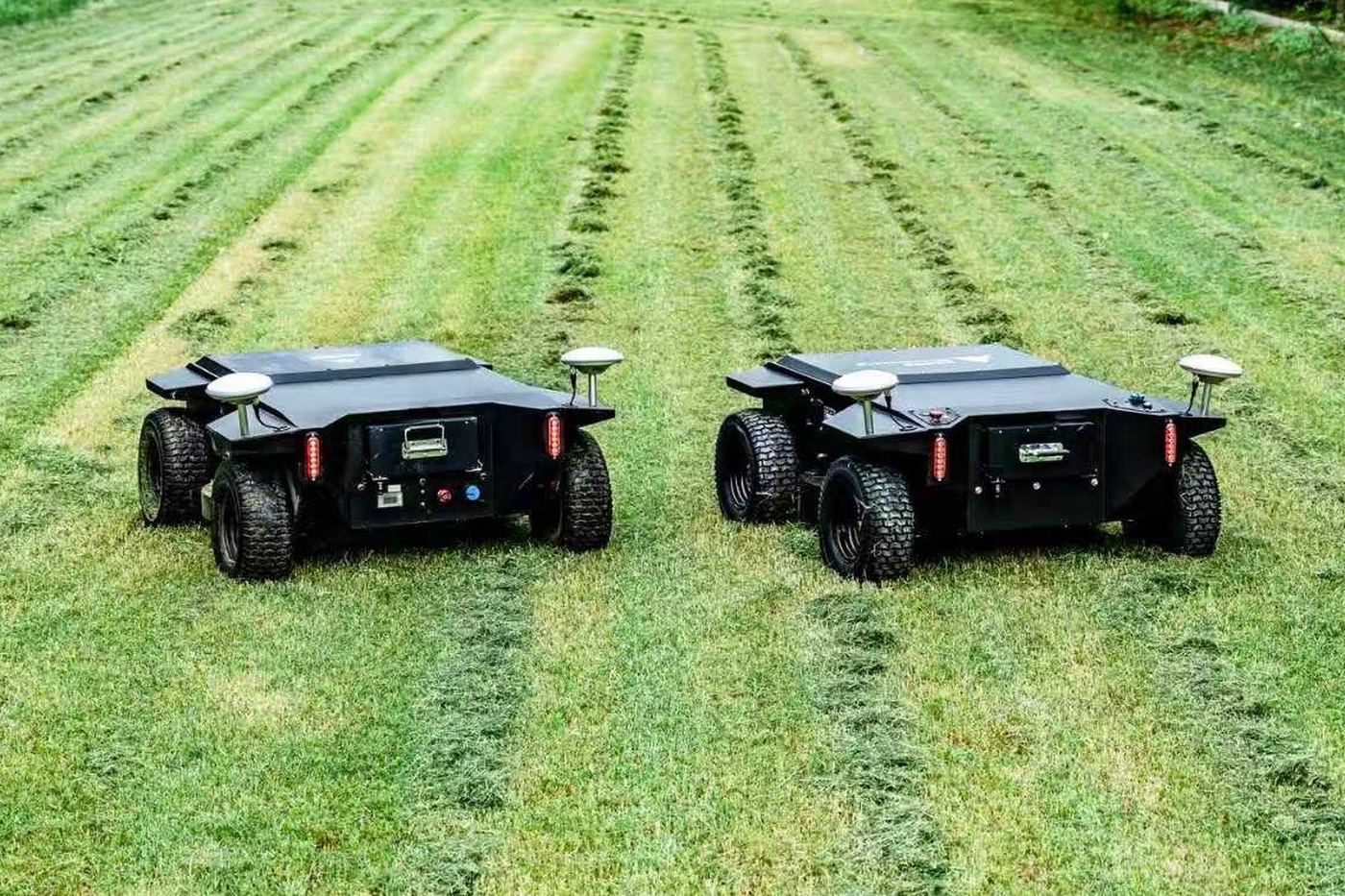
On the wide lawns in these photos, the bands run parallel and evenly spaced. That is the deck holding height across its width while the guidance holds the line — both halves of the job working at once.
The second thing you see: the clippings
Cut grass has to go somewhere, and where it goes tells you about the deck. Depending on the deck type and the conditions, clippings either disperse across the surface or gather in a light row behind the machine. In the photograph above they form distinct rows between the mown bands — a discharge pattern, not a mulch pattern.
The practical question buyers ask is whether they will be left with windrows to rake up. In normal weather, no: clippings break down within a few days and return to the soil. The exceptions are worth stating plainly — very long grass cut in one pass, or grass cut wet, will leave heavier clumps that take longer to disappear and can smother the turf underneath. That is a function of the grass and the conditions, not a defect in the machine, and it is why a first high pass followed by a second lower pass is standard practice on overgrown ground.
The third thing you see: stubble height
This is the measurement most often skipped in sales conversations, and it is the one that determines whether a machine suits a site at all. Cut height is adjustable, and on our wide-deck tracked models the deck ranges from 10 mm up to 200 mm.
That range covers two quite different jobs. At the low end you are maintaining turf — sports surfaces, park lawn, managed amenity grass — where the goal is an even, dense sward. At the high end you are not maintaining anything: you are knocking back rough ground, orchard rows, brush and vegetation that simply has to be reduced so it can be walked or worked around. Most operators settle somewhere in the middle for routine maintenance, and the setting is chosen per site rather than once for all sites.
Stubble height is also the fairest way to compare two machines, because it is a number rather than an impression. Ask any supplier for their adjustable range and their default setting before you look at a single photograph.
Three kinds of ground, three different reads
The same machine produces quite different photographs on different terrain, and reading them correctly matters more than comparing them.
Open lawn
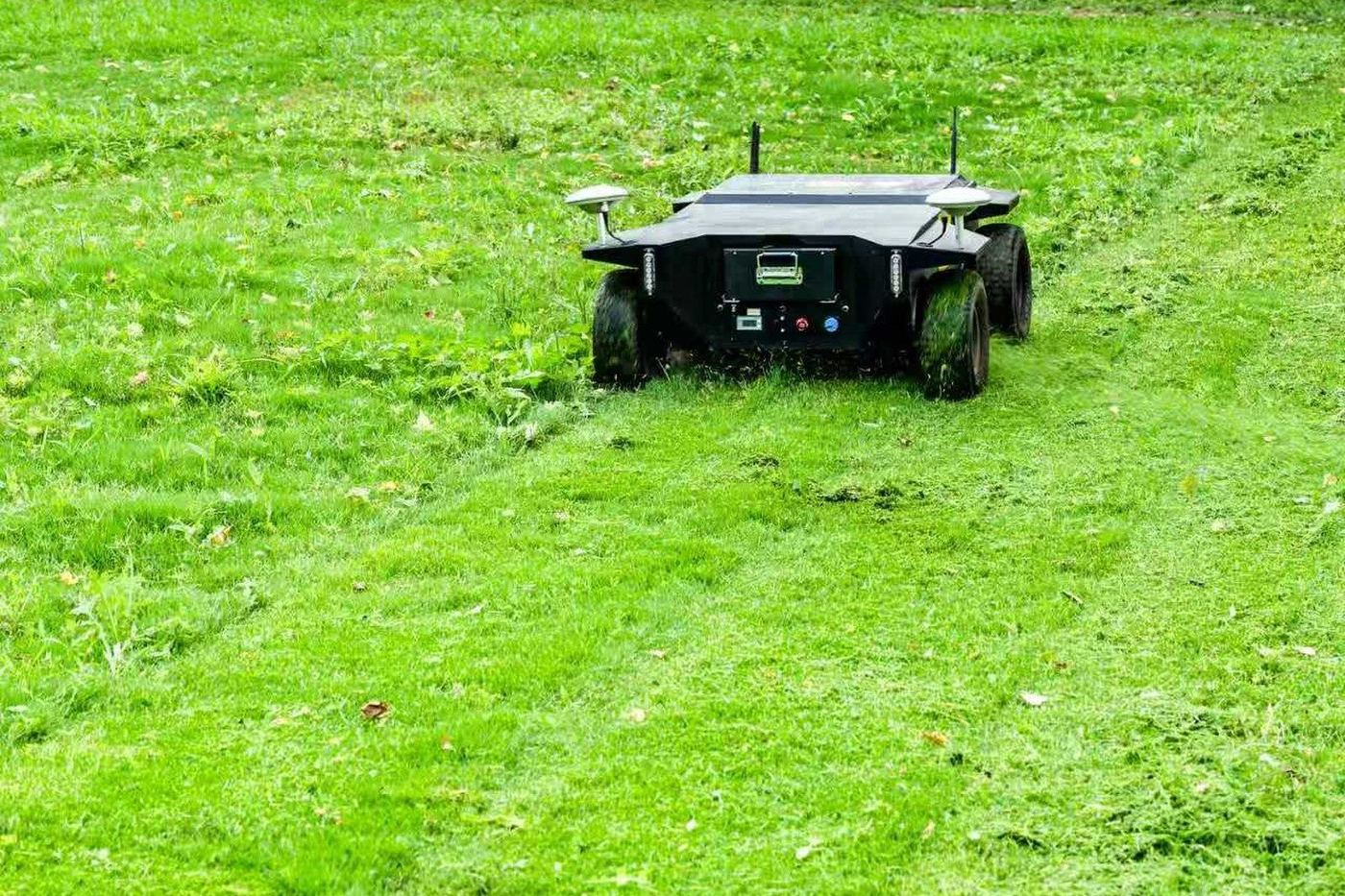
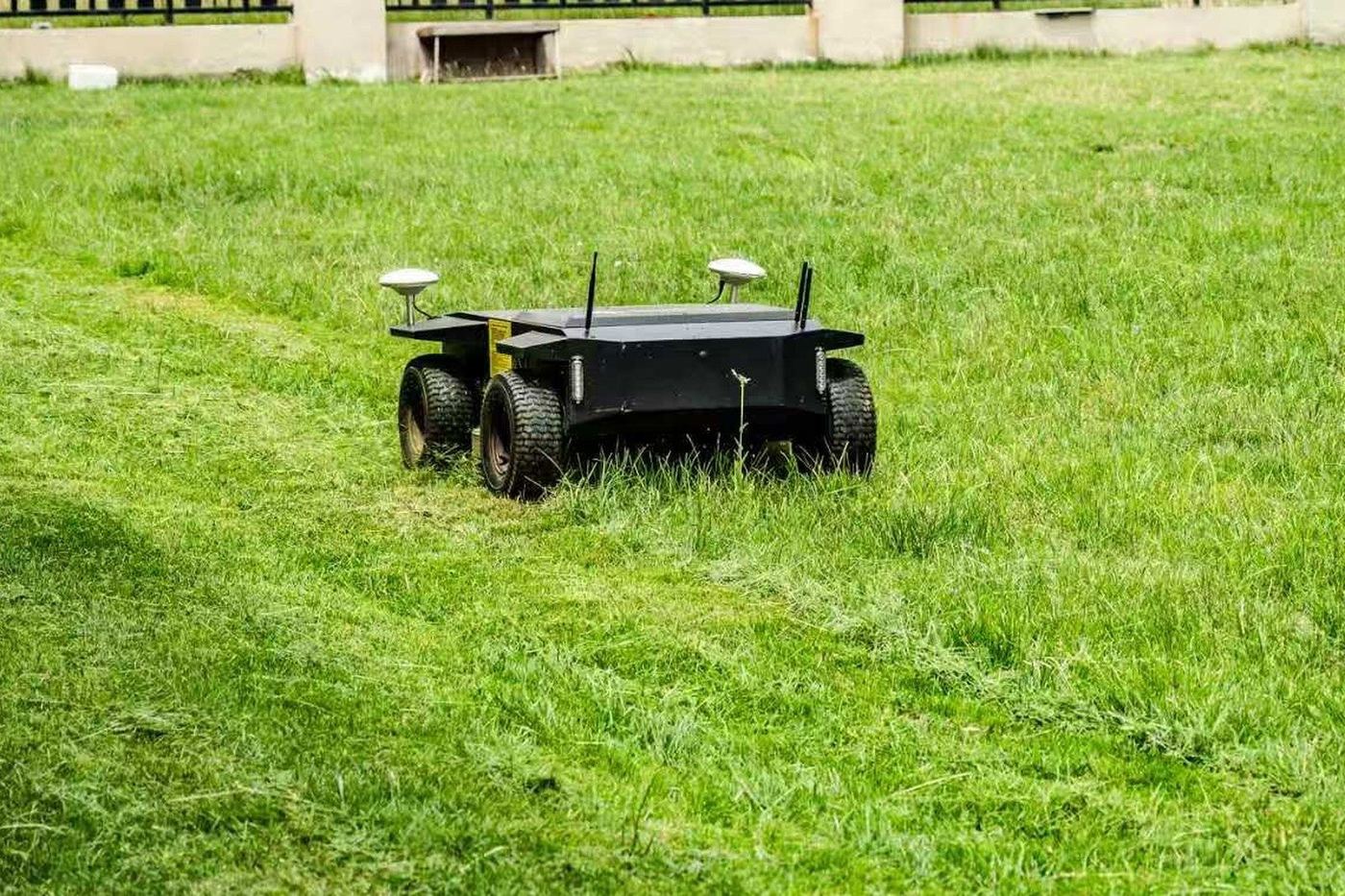
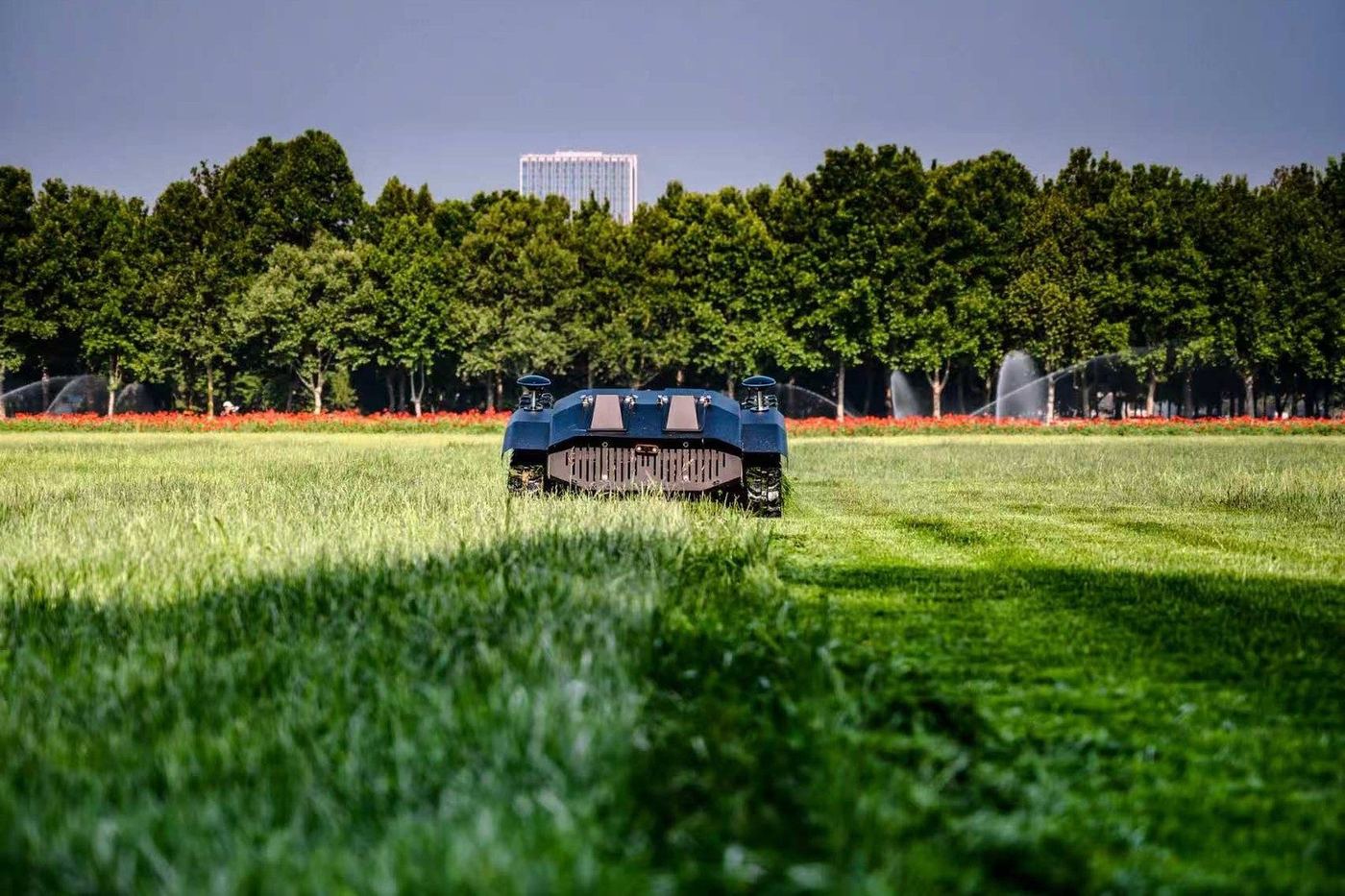
This is the cleanest test of deck performance, because there is nothing else to look at. You get even, parallel bands and a uniform stubble. If the finish here is ragged, no amount of terrain difficulty elsewhere will compensate — open lawn is where a deck either holds its height or does not.
Orchard rows
Between fruit trees, the machine works a narrow strip under the canopy, in ground a ride-on mower struggles to enter without risking trunks and low branches. What you should see is a cut that runs the length of the row with the trees untouched and the grass reduced to a workable height. This is the scenario where autonomous units earn their place, because the strip is tedious and repetitive for a crew and the machine does not get bored of it.
Slopes
On a tracked chassis the machine holds its line across the face of the slope, so the stubble stays level rather than scalloping in and out the way a wheeled unit can as traction shifts. On graded banks the difference between a level cut and a scalloped one is visible from the bottom of the hill, and it is usually the first thing a grounds manager notices.
What changes the result — and this is not a disclaimer
Cut quality is a function of grass and conditions as much as of the machine, and pretending otherwise is how buyers end up disappointed on delivery day. Four things move the result more than anything in the specification:
Wet grass. A wet blade of grass tears rather than shears. The stubble ends up frayed, clippings clump instead of dispersing, and the cut surface looks worse than the machine deserves. Mowing after the dew has lifted is not fussiness, it is basic practice.
Grass that is too long for the setting. If the grass is far above the cut height, a single pass at the target setting leaves a thin, yellowing result and a heavy mat of clippings. Two passes — high, then lower — gives a clean finish. This is true of every mower ever built.
Debris on the ground. Stones, wire, and fallen branches damage cutting elements and produce a ragged cut in the affected strip. Autonomous units detect and avoid obstacles, but detection is not the same as protection from what is already under the deck.
Cutting element condition. A dull blade or worn flail element tears instead of cutting. The visual signature is grass tips that go yellow a few days after mowing, which buyers often mistake for a machine fault rather than a maintenance item.
How to judge a cut for yourself
If a supplier sends you a photograph, four checks will tell you more than the picture's composition:
One — look across the width of the band, not along it. Even height edge to edge means the deck is set correctly. A pale scalped edge on one side is the failure signature.
Two — get low and look sideways at the stubble. A clean cut has flat, square tips. A torn cut has frayed, whitish tips. This is hard to fake in a photograph and hard to hide in person.
Three — look at the clippings. Evenly dispersed clippings mean dry grass and a sharp deck. Heavy clumps mean wet grass, long grass, or a dull element — and the photo will tell you which if you know the site conditions.
Four — ask what the setting was. A photograph at 30 mm and a photograph at 120 mm are not comparable, and a supplier who cannot tell you which is which is showing you a picture rather than evidence.
About the photographs on this page
They are original field photographs. They have been cropped for framing and resized for the web, and nothing in the grass, the stubble or the clippings has been retouched. Where a site had people or signage in the background, the frame was cropped to remove it — the cut surface itself is untouched. We would rather show a slightly imperfect surface honestly than a perfect one that does not exist.
If you want more — specific terrain, specific grass type, or video of a full pass from start to finish — ask and we will send it. Judging a cut from your own screen is worth more than any claim on a page.
Do I have to collect the clippings after mowing?
No. In normal dry conditions clippings break down within a few days and return nutrients to the soil. The cases where you would want to collect are specific: very long grass cut in one pass, wet grass, or a site where appearance standards require a cleared surface immediately after mowing. For routine maintenance mowing, leaving them is standard practice.
What cut height should I set?
It depends on the site, not on the machine. Maintained amenity lawn is normally kept in a low, consistent band; rough ground, orchard rows and brush are cut high simply to reduce growth so the area can be worked. Our wide-deck tracked models adjust from 10 mm to 200 mm, and the right setting is the one the site needs — not the lowest the deck can go.
Will a tracked machine damage the lawn?
Less than you might expect. Tracks spread the machine's weight over a larger contact area than wheels, which is why the surface behind the unit in these photographs is not rutted. Damage risk rises on soft, saturated ground regardless of chassis type, and that is a question of when you mow rather than what you mow with.
Will it hit the trees in an orchard?
Obstacle detection and avoidance are part of the guidance system, and the working strip between rows is planned when the site is mapped. That said, no detection system replaces a sensible site survey — low branches, irrigation risers and loose wire are things to identify before the first run, not during it.