
TL;DR
Winter storage protects the parts of an autonomous mower that cost the most: the removable LiFePO4 battery, the cutting deck and the navigation sensors. Clean and dry the machine, store packs indoors away from frost, check or replace wear items now, run software updates, and recommission on a short test route before the season starts. One afternoon of work prevents most spring service calls.
Why winter storage matters for a robotic mower
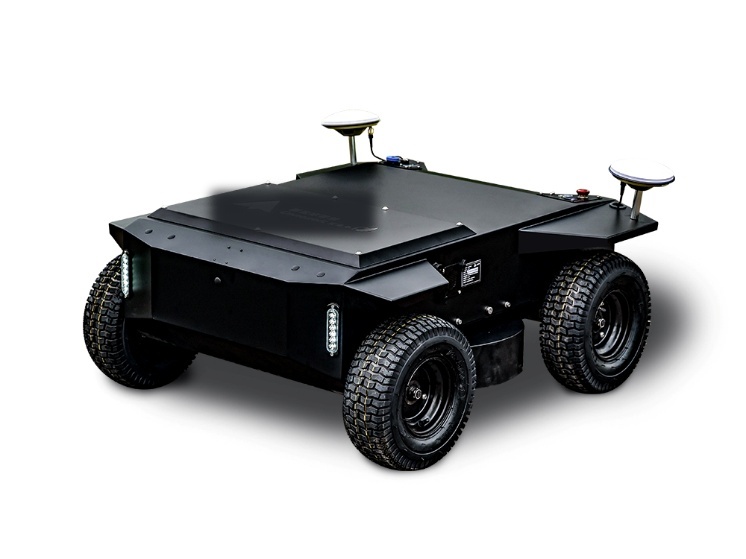
A conventional mower that sits damp for three months starts hard in spring. A robotic mower has more to lose: a lithium battery, servo drive motors, RTK-GNSS receivers and LiDAR sensors sit on every unit in our autonomous mower line, and moisture or flat-battery storage shortens the life of exactly the components that make the machine autonomous.
The economics point the same way. An unmanned mower earns its return on working hours — our robotic versus manual mowing cost breakdown covers that math. A machine waiting on a battery or a sensor in April produces nothing during the first growth flush, when cutting schedules matter most. Dealers and fleet operators tell us the same thing: most spring warranty claims trace back to skipped winter steps, not manufacturing faults.
Step 1: End-of-season cleaning and inspection
Before anything goes on a shelf, run the machine through a final wash and inspection. Dried sap and compressed grass hold moisture against metal and seals for months.
- Deck and blades first. Scrape packed grass from the deck, inspect the cutting blades for nicks and wear, and clean the cutting-height mechanism through its 20–100 mm range so nothing seizes at rest.
- Body, wheels and tracks. Clear debris from wheel arches and, on tracked units like the T1-900A, wash out the track frame and check track tension and lugs.
- Sensors and lenses. Wipe the LiDAR window, camera lens and GNSS antenna with a soft cloth — a clean sensor is a sensor that does not get a false obstacle reading on the first spring route.
- Fasteners and leaks. Walk around with a spanner, checking what field vibration loosens. Hybrid units get an engine-compartment check for fluid leaks.
Let the machine dry fully — ideally indoors overnight — before storage. The R1 is IP54 rated for rain at work, but weatherproofing is not a reason to store equipment wet.
Step 2: Battery care — the most important step
The R1 runs a removable LiFePO4 pack — up to two hours and 4,000 m² per pack in the field. Lithium iron phosphate chemistry tolerates long storage well, but only under the right conditions.
- Store packs indoors, dry and frost-free. Cold itself does not ruin a LiFePO4 pack, but charging one below freezing can damage it permanently — keep stored packs where spring charging happens at room temperature.
- Store at a partial charge, not full or flat. A pack left at 100% for months ages faster; a pack left at 0% can drift below its cutoff. A mid-range charge is the standard lithium storage practice.
- Check packs mid-winter. Put a reminder on the calendar to inspect and top packs once during storage. Self-discharge is low, not zero.
- Keep contacts clean and covered. Store packs off concrete on a shelf, with battery terminals clear of metal tools.
This is one reason removable packs are practical: a fleet can store batteries in a conditioned room while the machines winter in a shed. For owners comparing battery chemistries across equipment, LiFePO4’s storage behavior is a genuine advantage over lead-acid, which sulfates when left undercharged.
Step 3: Deck, blades and undercarriage maintenance
The cutting deck takes the most punishment of any part of the machine, so winter is when wear items get handled — not during the first week of tall grass.
- Sharpen or replace blades. Dull blades tear grass, draw extra current and reduce effective runtime. Order parts now against our 72-hour spare-parts response commitment rather than queuing behind every other operator in April.
- Lubricate pivot points on the height-adjustment and, on tracked machines, inspect idlers and rollers.
- Store off the ground where practical. Taking weight off tires and tracks prevents flat spots and track set.
Contractors mowing rough sites — embankments, brush, solar farms — should treat this section as mandatory. Our slope and embankment guide shows what the undercarriage survives in a season.
Step 4: Software, maps and security updates
Autonomy is software as well as hardware, and winter is the safest time to update it.
- Update the app and machine firmware while the unit is indoors with a stable connection.
- Back up routes and geofence maps. The patent-backed electronic-geofence zones and RTK-GNSS field maps represent hours of survey work — export them before a long idle.
- Charge the 7-inch touchscreen remote and store it with the machine, so the manual-override control is ready when needed.
If any sensor showed intermittent behavior late in the season — a LiDAR unit occasionally failing to reroute, a weak RTK fix — log it now and have the dealer diagnose it while the workshop is quiet. Our RTK-GNSS and LiDAR explainer describes what each system should do when healthy.
Spring recommissioning checklist
When growth returns, do not send the mower straight onto a full schedule. Recommission it in order:
- Bring packs to room temperature, then fully charge and install them.
- Inspect tire pressure or track tension and recheck every fastener.
- Power on indoors, confirm firmware version and verify saved maps and geofences load correctly.
- Run a short supervised route on open ground, testing obstacle avoidance with a safe target and exercising the manual override on the remote.
- Adjust the cutting height up for the first pass — never take a dormant lawn straight down to its summer height.
After two or three successful sessions, the machine is back on its normal autonomous schedule, and the fleet app handles the rest.
Winter storage FAQ
Can I leave my robotic mower outside all winter? The machine is built to work in rain, including an IP54-rated body, but long-term outdoor storage through frost and standing moisture is hard on seals, connectors and the battery. A dry shed with the battery stored indoors is the recommended setup.
Should I fully charge the battery before storing it? No — a LiFePO4 pack stores best at a partial charge in a dry, frost-free place, with one top-up check mid-winter. Reserve the full charge for the day before spring recommissioning, once the pack is back at room temperature.
How often should a robotic mower be serviced? Use the off-season for the full inspection: blades, deck, tracks or wheels, sensors and fasteners, plus firmware updates. During the growing season, a quick visual check and sensor cleaning on a regular schedule catches most problems early; your dealer can advise the interval for your hours of use. Our Buyer FAQ covers warranty, parts and coverage questions as well.