WJ-T-1100M & WJ-T-1300M Autonomous Mowers
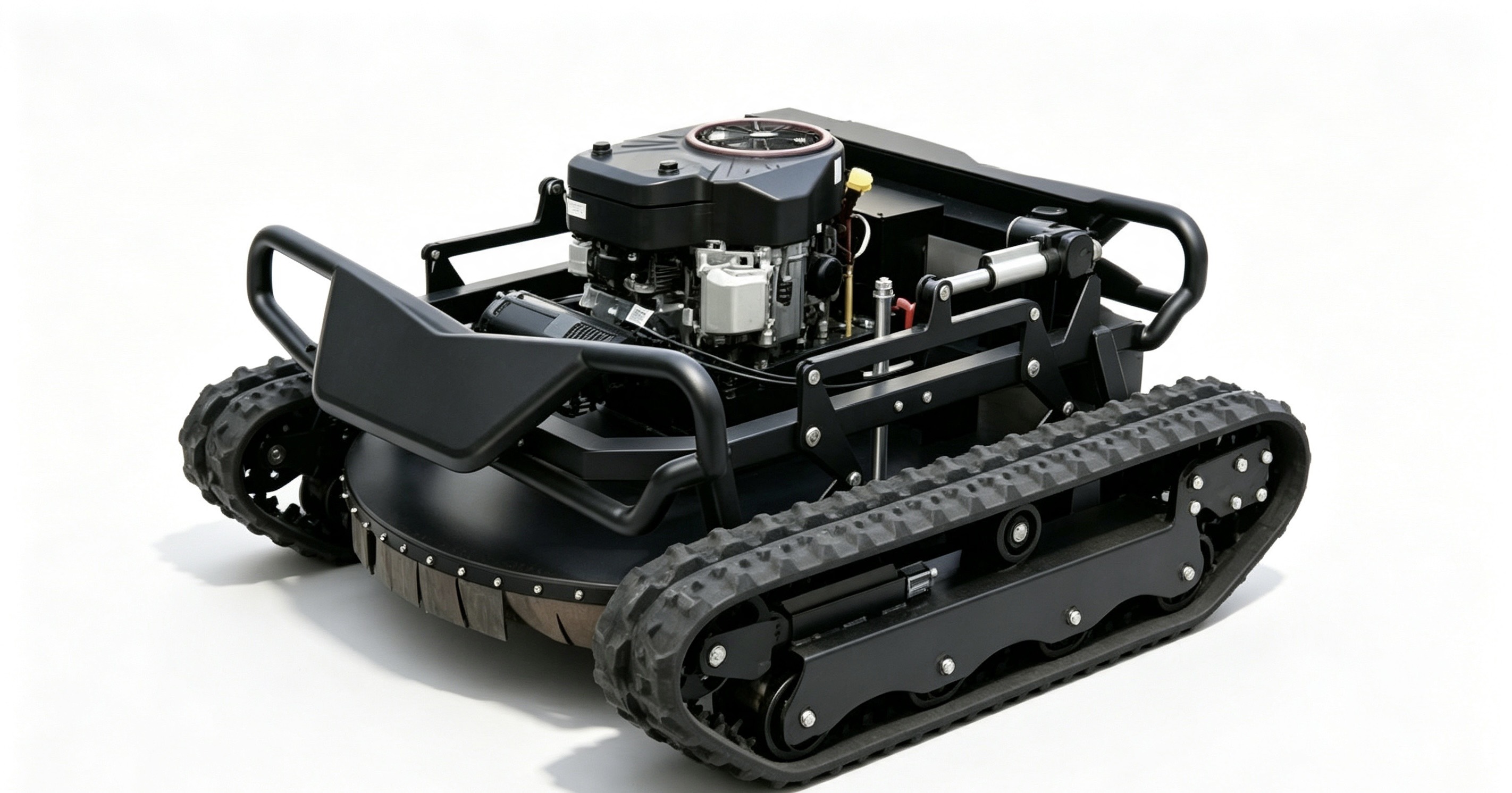
A wide-deck rubber-track hybrid platform for sites where area matters more than manoeuvrability — utility-scale solar, wind farms, long dam embankments and large orchard blocks. The WJ-T-1100M and WJ-T-1300M share one chassis and drivetrain; the WJ-T-900A is a separate, narrower tracked platform with its own specification.
Three deck sizes, one chassis
The WJ-T-900M, WJ-T-1100M and WJ-T-1300M share a chassis, powertrain, navigation and safety system — only deck width differs, and all three carry the same 10–200 mm cut range. The WJ-T-900A is a separate platform with its own deck geometry and a 20–150 mm range, so specifications are quoted per model rather than carried across the range.
WJ-T-900M — 900 mm deck
The narrowest deck on this platform, for tight service lanes, gateways and rows the wider decks cannot enter. Full specification →
WJ-T-1100M — 1,100 mm deck
Peak efficiency 3,000–4,000 m²/h. The balanced choice for solar arrays with standard row spacing and mid-size embankments.
WJ-T-1300M — 1,300 mm deck
The widest deck in the range. Fewer passes on long, open runs such as wind farm access tracks and dam crests.
Slopes up to 60°
Rubber tracks with low ground pressure keep the machine planted on embankment faces and cut slopes beyond what wheeled mowers can hold safely.
Engine cuts, battery moves
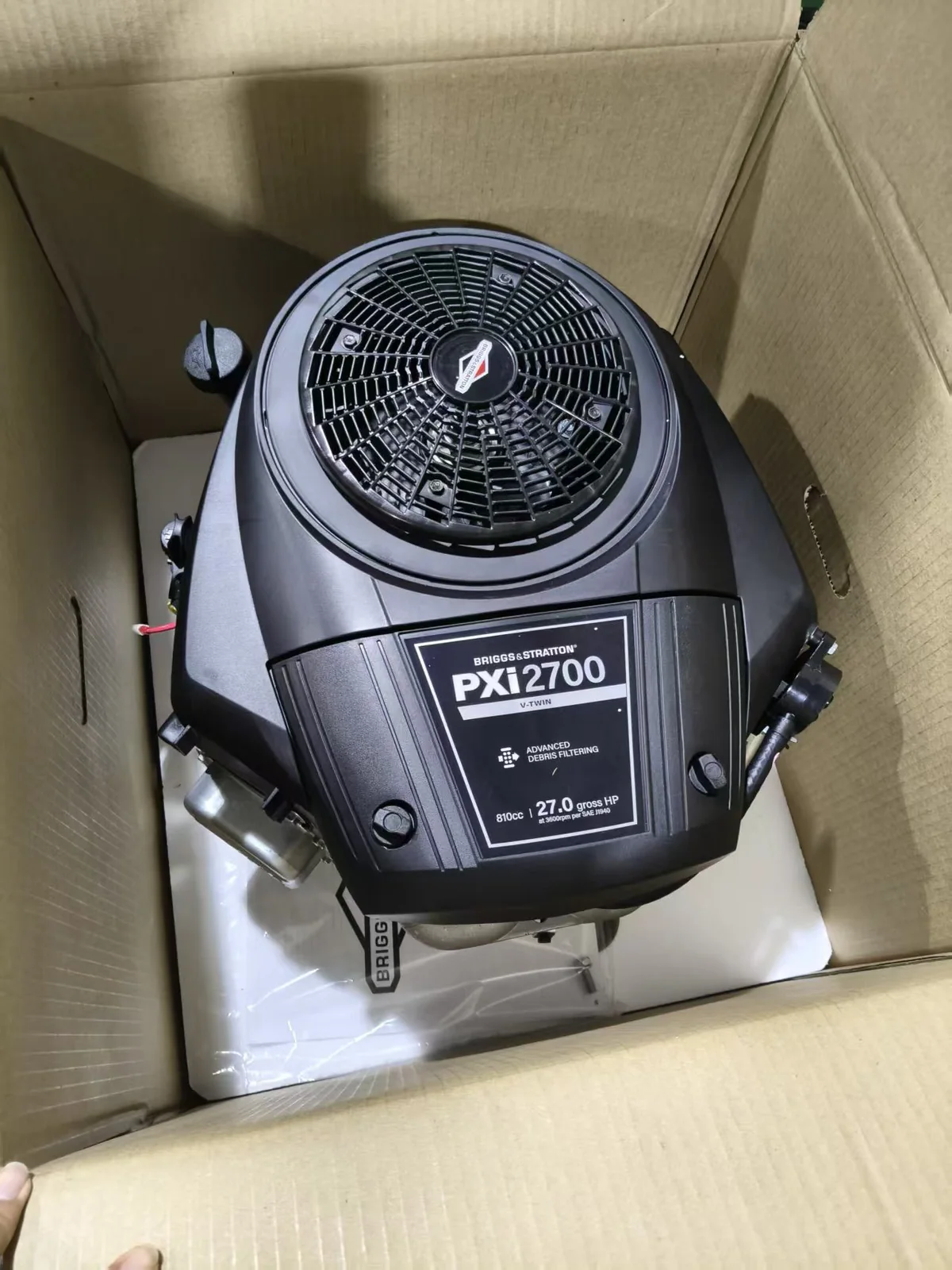
Briggs & Stratton 810cc 27 HP drives the cutting deck only. A separate battery pack drives the tracks, so no mains power is needed on site.
4–5 hours on one tank
A 9.9 L tank gives the WJ-T-1100M a 4–5 hour run, and the 19.0 L tank gives the WJ-T-1300M 6–7 hours — enough for a full shift on remote solar and wind sites where refuelling points are not available.
RTK-GNSS, no boundary wire
Maps the site once, then repeats scheduled routes. No wire to bury across panel rows or along embankment crests.
Technical specification
Figures apply to the standard configuration. The WJ-T-1100M and WJ-T-1300M share one chassis and drivetrain but differ in deck width, blade count, throughput and weight; figures are quoted per model. Specifications are not transferable to the WJ-T-900A, which is a separate platform with its own deck geometry and cut-height range.
| Platform | Rubber-track hybrid-electric, all-terrain |
|---|---|
| Model / deck | WJ-T-1100M — 1,100 mm | WJ-T-1300M — 1,300 mm |
| Cutting height | 10–200 mm (lifting deck) |
| Blades | WJ-T-1100M — 2-blade deck | WJ-T-1300M — 4-blade deck (swing blades) |
| Blade speed | 3,000 rpm |
| Peak efficiency | WJ-T-1100M — 3,000–4,000 m²/h | WJ-T-1300M — 4,500–5,500 m²/h |
| Net weight | WJ-T-1100M — 380 kg | WJ-T-1300M — 470 kg |
| Overall dimensions | WJ-T-1100M — 1,500 × 1,400 × 630 mm | WJ-T-1300M — 1,430 × 1,710 × 680 mm |
| Max climbing angle | Up to 60° |
| Powertrain | Briggs & Stratton 810cc 27 HP drives the cutting deck; a separate battery pack drives the rubber tracks |
| Control voltage | 48 V |
| Starting | Electric start with remote start / stop |
| Endurance | WJ-T-1100M — 4–5 h per full tank | WJ-T-1300M — 6–7 h per full tank |
| Fuel tank | WJ-T-1100M — 9.9 L | WJ-T-1300M — 19.0 L |
| Travel speed | 0–6 km/h |
| Navigation | RTK-GNSS autonomous, self-developed path planning, no boundary wire |
| Obstacle avoidance | LiDAR fusion for dynamic obstacles |
| Control | Large-screen 2.4G remote controller + mobile app with alarms |
| Operation | Autonomous scheduled routes + manual remote override |
| Charging dock | Auto charging dock included |
Fuel tank capacity, IP rating and noise level for the WJ-T-1100M and WJ-T-1300M are issued with the per-order datasheet. The models are built to order, and final configuration is confirmed on the order. Ask for the current datasheet before specifying.
Where the wide deck pays off
Documents
The dedicated WJ-T-1100M and WJ-T-1300M datasheets are issued per order. The shared platform documents are available now.
Other models in the range
The engine behind the deck
Both the WJ-T-1100M and the WJ-T-1300M run the same Briggs & Stratton PXi 2700. It drives the cutting deck only — the tracks run on a separate battery pack.
Frequently asked questions
Deck, fuel, drivetrain and support questions buyers raise before ordering.
What is the deck difference between the WJ-T-1100M and WJ-T-1300M?
The WJ-T-1100M runs a single 1,100 mm deck with two swing blades — the same deck family as the 900 mm WJ-T-900M. The WJ-T-1300M uses a twin-deck arrangement carrying four blades across 1,300 mm, which is what lifts its output to 4,500–5,500 m²/h.
What are the fuel tank sizes and run times?
The WJ-T-1100M carries 9.9 L for 4–5 hours of mowing; the WJ-T-1300M carries 19.0 L for 6–7 hours. Both figures are per full tank at working load on the 810 engine.
What engine drives these decks?
A Briggs & Stratton PXi 2700 V-twin — 810cc, 27.0 gross HP — driving the cutting deck only. The rubber tracks run on a separate battery pack, so neither model loses cut quality as the slope increases.
How steep can the wide-deck platform work?
Up to 60 degrees. This is the wide-deck chassis rating shared by the WJ-T-900M, WJ-T-1100M and WJ-T-1300M, and it is a different chassis from the 900A, which is rated to 40 degrees.
How does this compare with the WJ-T-900A?
They are separate platforms. The 900A is a 900 mm three-blade machine rated to 40 degrees with a 20–150 mm cut range. The wide-deck platform runs 900, 1,100 and 1,300 mm decks with a 10–200 mm cut range and 60-degree capability, and its specifications are quoted per model.
Deck width, configuration, quotation
Tell us the site type, total area and row spacing. We will confirm which deck suits the ground and issue a quotation for your destination.