The short answer: most orchards and small farms do not need five separate machines sitting in a shed — they need one carrier that keeps working after the grass is cut. The WANJI WJ-M-800 is a tracked diesel multi-tool: an 800 mm flail mowing head on the front, and five quick-swap attachment sets behind it. Mow the rows, swap the head, and the same machine tills, cultivates, ditches, backfills, ridges and drills. One engine, one trailer, one service schedule.
1. Five jobs, one carrier
Small-scale land work is seasonal by nature. A dedicated mower earns its keep for a few months; a tiller for a few weeks; a ditching machine for a few days. Bought separately, each machine brings its own engine, its own maintenance and its own depreciation — and spends most of the year parked.
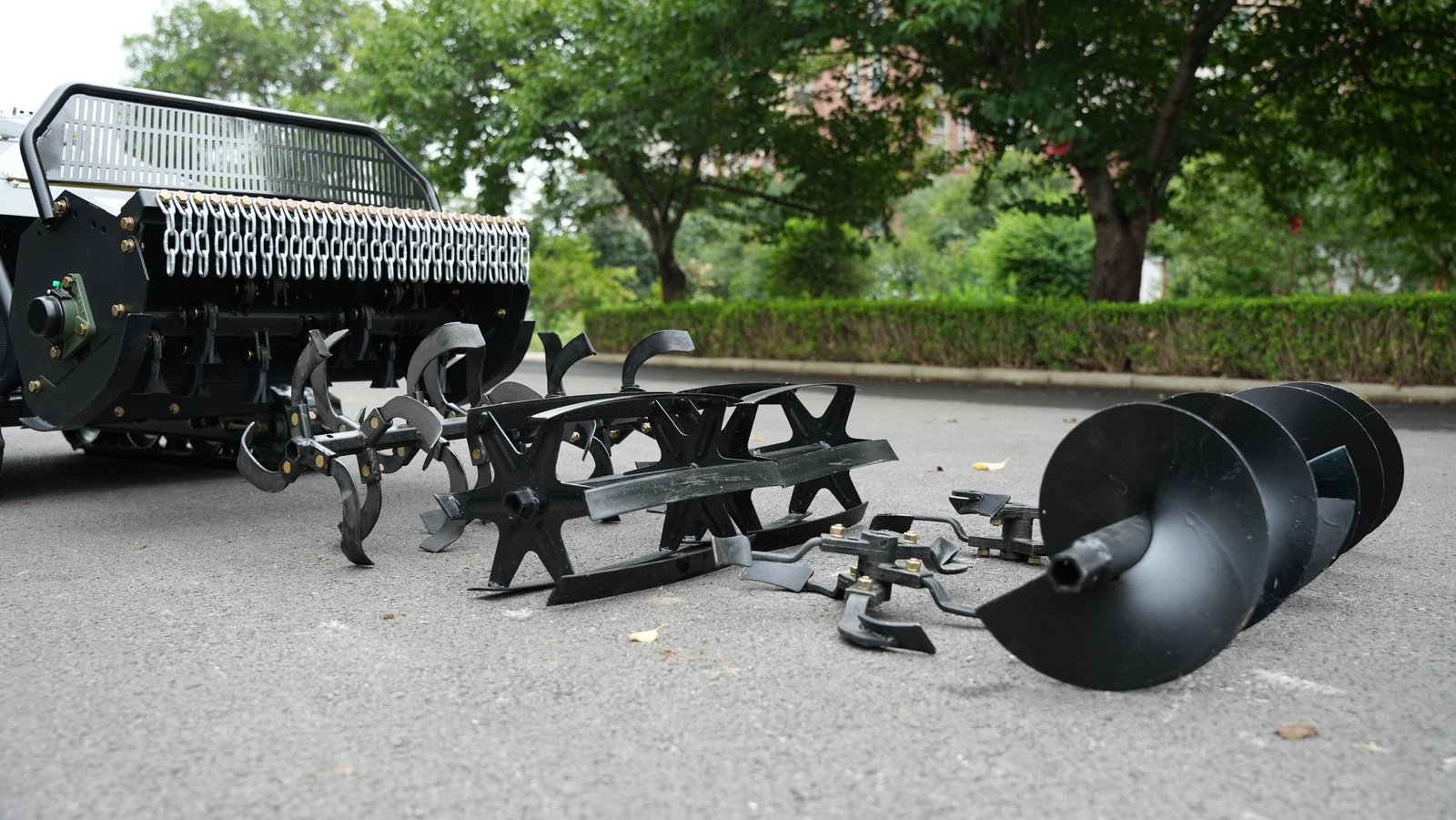
The M-800 takes the opposite approach: one 422 kg tracked carrier, one 9.5 kW Yuchai diesel engine, and a front implement you swap for the job. The five jobs we group it around:
- Mowing — 800 mm front flail head for grass, weeds and light scrub
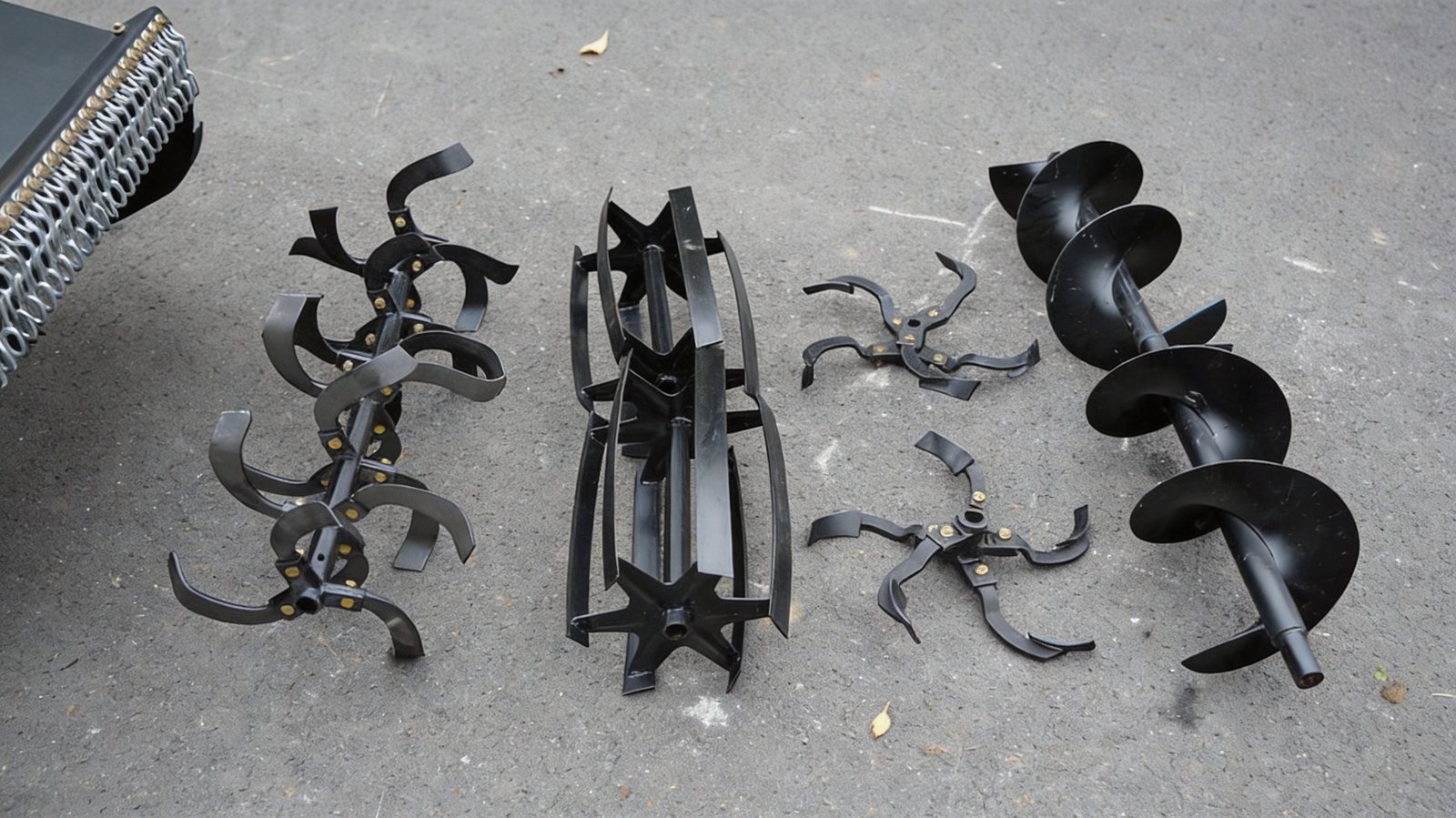
- Rotary tilling & cultivating — rotary tiller set, plus a star-wheel cultivator for shallow loosening and weeding
- Ditching & backfilling — ditching blade set for drainage and irrigation trenches, and for closing them after pipe or cable work
- Ridging — ridging disc set for raised beds and ridged crop rows
- Hole drilling — earth auger for planting holes, fence posts and greenhouse supports
2. Job one: mowing with an 800 mm flail head
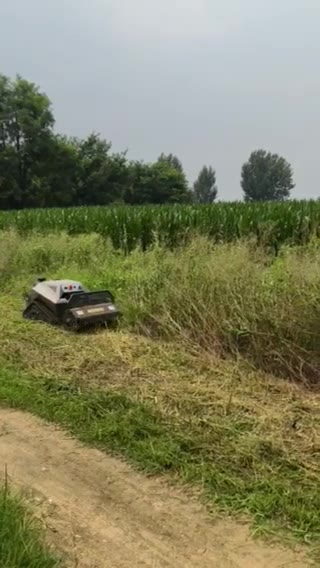
The front flail deck cuts an 800 mm pass at a rated working efficiency of 1,998 m²/h, with a 30–120 mm cutting height range. Flail cutting suits orchard and vineyard rows because it handles the stuff a finishing deck cannot: tall grass after a wet spell, weeds along the tree line, light scrub on the headland.
It is also the safer cutting style around assets. A flail head keeps debris under the deck instead of throwing it sideways — relevant when the row contains trunks, drip lines, irrigation risers and low-hanging fruit. The full mowing specification is on the WJ-M-800 product page.
3. Job two: rotary tilling and cultivating
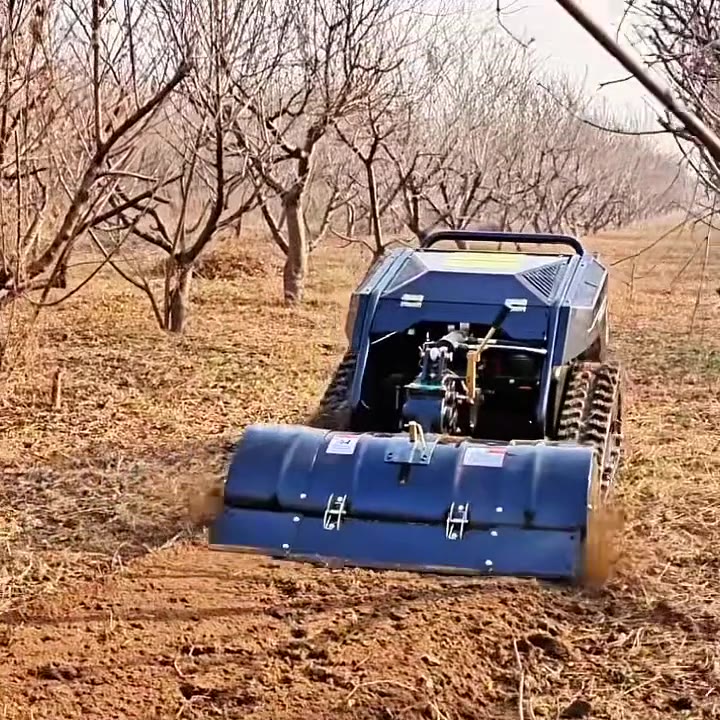
Swap the flail head for the rotary tiller set and the same carrier prepares ground: seedbeds in the vegetable plot, soil incorporation between rows, breaking up a compacted strip before replanting. Because the machine runs on tracks, it can work ground that a wheeled unit would spin on — including soil that has just been loosened.
For lighter passes there is the star-wheel cultivator set: shallow loosening and weeding between rows without turning the whole soil profile. In practice this is the attachment that stays on between mowing rounds, keeping row middles clean through the season.
4. Job three: ditching and backfilling
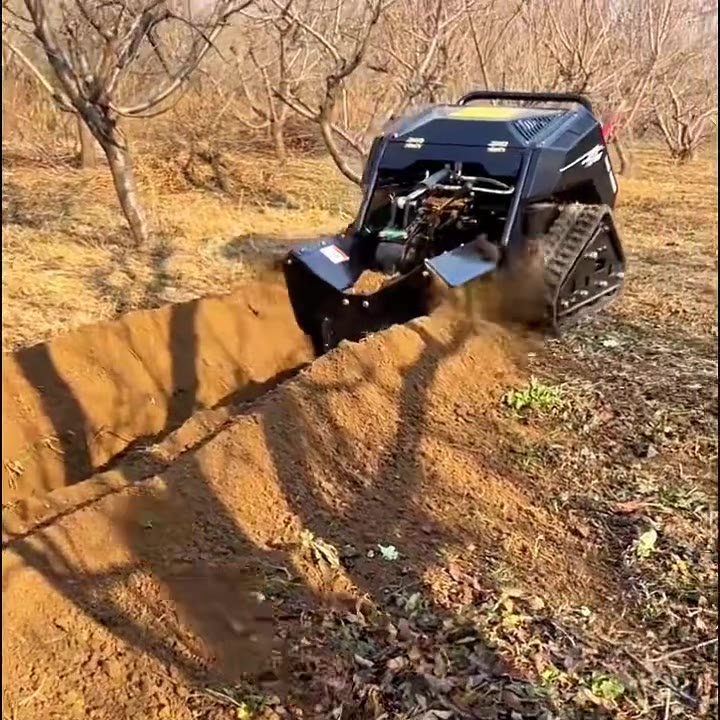
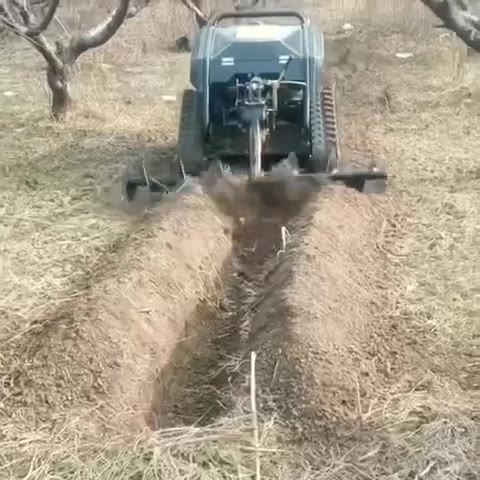
Drainage and irrigation decide whether an orchard survives a wet year. The ditching blade set opens trenches for drains, drip main lines and cable runs along the plot edge — work that otherwise means hiring a mini-excavator for a day or digging by hand.
The same working system covers the second half of the job: backfilling the trench after the pipe or cable goes in. Open, lay, close — one carrier on site from start to finish. Trench width and depth requirements are confirmed per order, so tell us the pipe diameter and burial depth you are working to before we configure the set.
5. Job four: ridging for bed crops
The ridging disc set pulls soil into raised beds and ridged rows — the standard layout for potatoes, vegetables and strawberries, and a practical way to keep roots above wet ground. Ridged rows also define the traffic pattern for the rest of the year: the machine then mows and cultivates the same lanes the discs formed.
6. Job five: hole drilling with the earth auger
The earth auger turns the carrier into a planting machine: holes for new trees when replanting an orchard block, fence posts around the plot, supports for a greenhouse or net frame. Anyone who has dug fifty planting holes by hand will understand why this attachment earns its place in the set.
7. Why diesel and tracks for a multi-tool
A machine that changes jobs all day cannot plan its life around a charging window. The Yuchai 1102F-80 diesel, rated 9.5 kW, means refuel and keep working — no power needed at the field edge, no dock, no battery logistics between the orchard and the vegetable plot.
The tracked chassis spreads the 422 kg over rubber tracks instead of four small contact patches, which is what lets the machine mow soft headlands and then drive onto freshly tilled soil. And at 1,880 × 995 × 780 mm the whole machine — with its attachment sets — moves between plots on a small trailer. One engine to fuel, one machine to service, one trailer to load.
8. Where the M-800 is not the right machine
If the work is mowing and nothing else, buy a mowing specialist. Steep embankments and solar perimeters belong to the tracked WJ-T-900A (40°) or WJ-T-1100M / T-1300M (60°); rough grass on slopes up to 45° working is WJ-F-1000L flail territory; manicured turf is for the wheeled WJ-R1. And a multi-tool is not a mini-excavator — deep trenching in hard or rocky ground is outside its job list. The M-800 makes sense when your year genuinely mixes mowing with soil work, and you would rather maintain one diesel than five.
Quick answers
What are the five jobs?
Mowing (800 mm flail), rotary tilling and cultivating, ditching and backfilling, ridging, and hole drilling with the earth auger — all on one tracked carrier.
Is it five machines or one?
One machine with quick-swap attachment sets. One 9.5 kW Yuchai diesel engine to fuel, service and trailer.
Does it need charging infrastructure?
No. Diesel power — refuel and continue. The tracked 422 kg chassis works on soft or freshly tilled ground; attachment weights are confirmed per order.